Spring Cleaning with Kids: 10 Easy Hacks for a Sparkling Home in 2024
Turn spring cleaning from a dreaded chore into a joyful family project. These 10 actionable hacks help you involve your kids, teach responsibility, and get your home sparkling clean without the stress.
 Claire Bennett
Claire Bennett — Family Routines & Meal Planning Editor

The days are getting longer, the birds are chirping, and the sunshine is practically begging you to open the windows. But then you look around your home, a battlefield of winter clutter and dust bunnies, and the sheer thought of tackling spring cleaning feels less like a breath of fresh air and more like an uphill marathon, especially when you have little ones underfoot. I remember countless springs standing in my living room with toys scattered everywhere and a faint film of dust on every surface, wondering how I could possibly deep clean while also keeping my toddlers from "helping" by making bigger messes.
In this article
- Why Involving Kids in Spring Cleaning Matters (Beyond Just a Clean Home)
- Before You Start: Planning Your Family's Spring Cleaning Mission
- Hack #1: Age-Appropriate Chores for Every Child (Toddlers to Teens)
- Hack #2: Make it a Game! Fun Ways to Get Kids Excited About Cleaning
- Hack #3: The Power of the Playlist & Timer: Keeping Energy High
- Hack #4: Kid-Friendly & Safe Cleaning Supplies (Our Top Non-Toxic Picks)
- Hack #5: Decluttering Together: Teaching Kids to Let Go (The 'Keep, Donate, Toss' Method)
- Hack #6: Reward Systems That Actually Work (Beyond Just Money)
- Hack #7: Tackling Tricky Zones: Specific Tips for Toy Rooms & Bedrooms
- Hack #8: Dealing with Resistance: Gentle Strategies for Unwilling Helpers
- Hack #9: Post-Cleaning Celebration & The 'Sparkle Maintenance' Plan
- Hack #10: Essential Spring Cleaning Checklist for Busy Families
Involving your kids in spring cleaning with kids isn't just possible — it's one of the smartest moves you can make as a parent. This guide covers 10 actionable hacks to transform spring cleaning from a solo struggle into a family-wide mission in 2024. You'll achieve a sparkling home while teaching real-life skills along the way, and maybe even find some joy in the process.
Key Takeaways
- Assign age-appropriate tasks so kids feel capable, not overwhelmed.
- Use timers, games, and music to keep energy high during cleaning blocks.
- Stick to non-toxic, plant-based cleaning supplies when kids are helping.
- Declutter using the "Keep, Donate, Toss" method and a 30-day "maybe" box.
- Implement reward systems that go beyond just money, focusing on shared family fun.
- Build daily 10-minute tidy habits so deep cleaning sessions become less daunting.
Why Involving Kids in Spring Cleaning Matters (Beyond Just a Clean Home)
When my youngest was 2, I discovered that simply giving her a spray bottle filled with water and a cloth kept her happily "cleaning" for ages while I tackled more serious tasks. It wasn't about the spotless surface she left behind (though she tried her best!), but about her participation. Children who do regular chores develop higher self-esteem, stronger work ethic, and better problem-solving skills. When I first started getting my kids involved, my primary motivation was selfish: I desperately needed help. But I quickly saw the bigger picture. They learn responsibility, teamwork, and genuine satisfaction from completing a task.
Research from the University of Minnesota Extension confirms that children who regularly participate in household tasks tend to be more well-adjusted and demonstrate greater empathy later in life. Additionally, the American Academy of Pediatrics emphasizes that age-appropriate chores foster independence and a sense of contribution. For us, it's become a cornerstone of how we operate as a family, and honestly, the occasional comical soapy mishap makes for better memories than a solo scrub session ever could. It's truly one of the most practical parenting tips for busy moms you can adopt.
Before You Start: Planning Your Family's Spring Cleaning Mission
Trying to deep clean an entire house in one day with kids is a recipe for disaster and parental meltdown. Trust me, I've been there, staring at a half-cleaned bathroom and a trail of toys, wondering where I went wrong. Instead, break your spring clean into 15-30 minute blocks spread across a week rather than tackling everything in one exhausting day. Sit down with your kids and talk about what spring cleaning means. Frame it as "getting our home ready for sunny adventures" or "making space for summer fun."
I've found it helpful to involve my kids in creating a visual spring cleaning checklist for busy moms, letting them choose tasks they want to "own." This simple act of choice gives them agency and makes them feel like a valued part of the team. Set clear expectations based on their age: tell a preschooler they'll be wiping low shelves, not scrubbing the bathroom floor. We assign one small area per day for a week rather than attempting a full house blitz on Saturday. This prevents burnout and keeps the energy up for everyone involved in spring cleaning with kids.
Hack #1: Age-Appropriate Chores for Every Child (Toddlers to Teens)
The right task at the right age means kids feel competent instead of frustrated. When my kids were toddlers, I used to get frustrated when they couldn't perfectly put away their clothes. Then I realized I was asking too much. The goal isn't perfection — it's participation and fostering a sense of capability. Here's what works at each stage for effective spring cleaning with kids:
| Age Group | Tasks They Can Handle |
|---|---|
| Toddlers (1-3) | Pick up toys into a bin, put books on low shelves, wipe small spills, carry non-breakable items to the hamper, dust with a microfiber cloth. |
| Preschoolers (4-5) | Make beds (with help), put away clothes in drawers, set the table, wipe baseboards, sort toys by type, water plants, wipe cabinet fronts. |
| Elementary (6-9) | Vacuum small rugs, help with dishes, clean mirrors, fold towels, sweep floors, wipe counters, take out small trash bags, organize their desk. |
| Pre-Teens (10-12+) | Clean bathrooms (with supervision), deep clean their room, wash windows, organize closets, help with yard work, change bed linens, do laundry from start to finish. |
Focus on effort and growth, providing gentle guidance rather than criticism. For daily habits that build toward bigger cleaning projects, our morning routine for busy moms includes quick tidy-ups that reinforce these skills.
Hack #2: Make it a Game! Fun Ways to Get Kids Excited About Cleaning
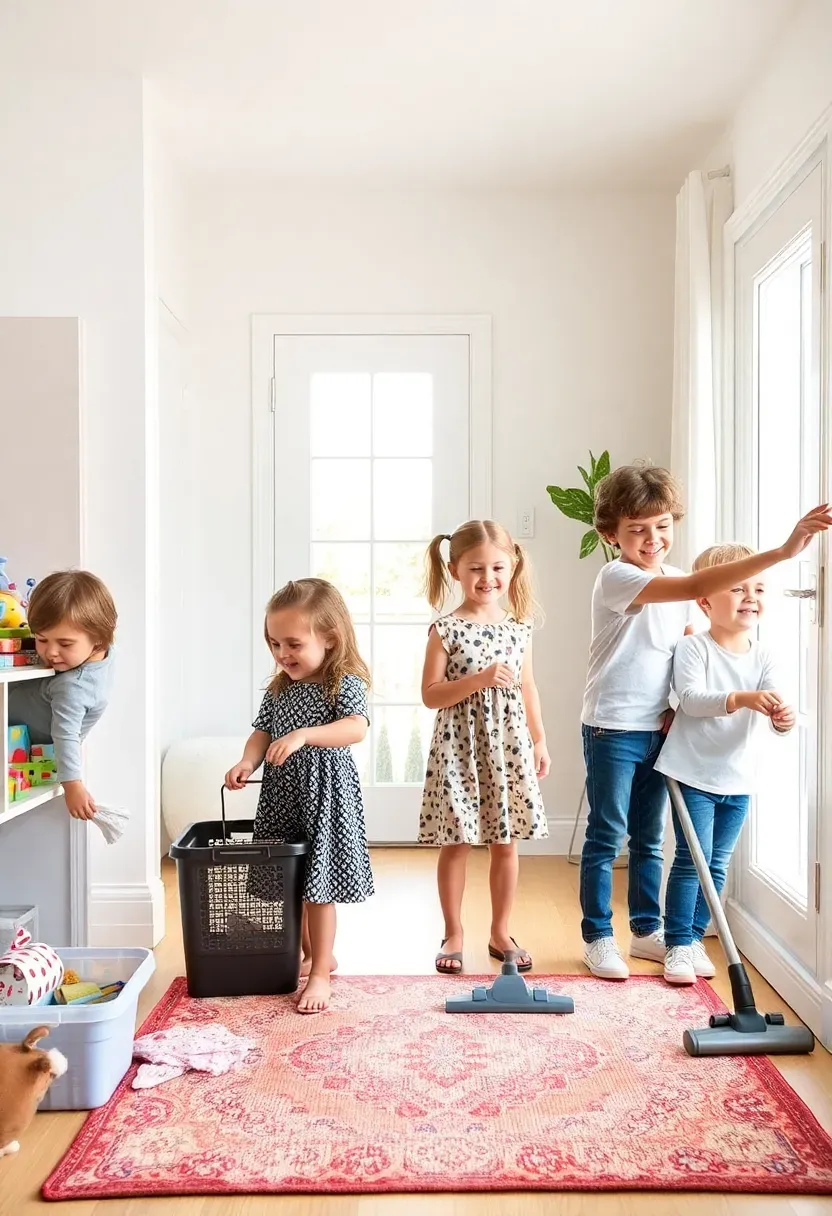
Gamification is the single best tool for keeping kids engaged during cleaning. When the kids start dragging their feet, I pull out my secret weapon: "Speed Cleaning Olympics." We race against a kitchen timer to see who can dust the most surfaces or put away the most books before the buzzer. The friendly competition keeps everyone moving and laughing. Another household hit is "Cleaning Bingo," with tasks like "wipe a window" or "dust a bookshelf" on the squares. First to get bingo picks the family movie or gets an extra 15 minutes of screen time.
For younger kids, a simple chore chart with stickers provides the visual progress they thrive on. For bigger tasks, consider rewards that match their interests: choosing the next family dessert, or a trip to the park. I once promised my kids a trip to our favorite ice cream shop if we got the entire playroom decluttered before lunch. I've never seen such speedy toy-sorting. These strategies are fantastic for motivating kids to participate in spring cleaning with kids.
Hack #3: The Power of the Playlist & Timer: Keeping Energy High
Nothing saps motivation faster than staring at a mountain of chores in silence. This is where your secret weapons come in: an upbeat playlist and a simple timer. Create a "Spring Cleaning Power Playlist" filled with your family's favorite high-energy tunes. Blast it! You'd be surprised how much dancing happens, even while scrubbing. Music helps shift the mood from "chore" to "party."
Pair the music with a timer. For younger kids, set it for 5-10 minutes: "Let's see how much we can clean before the timer buzzes!" For older kids and bigger tasks, 15-20 minute bursts work well. The timer creates a clear end point, making the task feel less endless. When the timer goes off, everyone gets a short break, a drink of water, or a quick dance party before the next timed session. This strategy is also excellent for our easy summer routine for kids when they have more unstructured time.
Hack #4: Kid-Friendly & Safe Cleaning Supplies (Our Top Non-Toxic Picks)
Non-toxic, plant-based products are non-negotiable when kids are involved in spring cleaning with kids. A 50/50 mix of white vinegar and water handles most surfaces — it's effective, cheap, and safe. Baking soda paste scrubs sinks and tubs without harsh chemicals. For glass, add a tiny bit of rubbing alcohol to your vinegar mix for a streak-free shine.
Look for plant-based brands clearly labeled as safe for children and pets. I often reach for Method All-Purpose Cleaner — it uses naturally derived ingredients and the French Lavender scent is a household favorite. Another great option is Seventh Generation Disinfecting Multi-Surface Cleaner, which uses botanical ingredients. Always check the Environmental Working Group's (EWG) Guide to Healthy Cleaning for product safety ratings.
Equip your helpers with their own miniature tools: small spray bottles (filled with water or diluted cleaner), colorful microfiber cloths, small dusters, and a mini broom-and-dustpan set like the Melissa & Doug Pretend Play Cleaning Set. Having their own gear makes them feel important and eager to help. Always supervise sprays, and teach them never to mix cleaning products. The CDC's cleaning safety guidelines are worth reviewing before you start, especially to prevent accidental ingestion or skin irritation.
Hack #5: Decluttering Together: Teaching Kids to Let Go (The 'Keep, Donate, Toss' Method)
Decluttering can be the most challenging part of spring cleaning with kids, especially when every broken toy holds sentimental value. Frame getting rid of stuff as giving to others, not losing something. Instead of "clean your room," try "let's find 10 toys we don't play with anymore to give to kids who need them." This reframes it as kindness rather than loss.
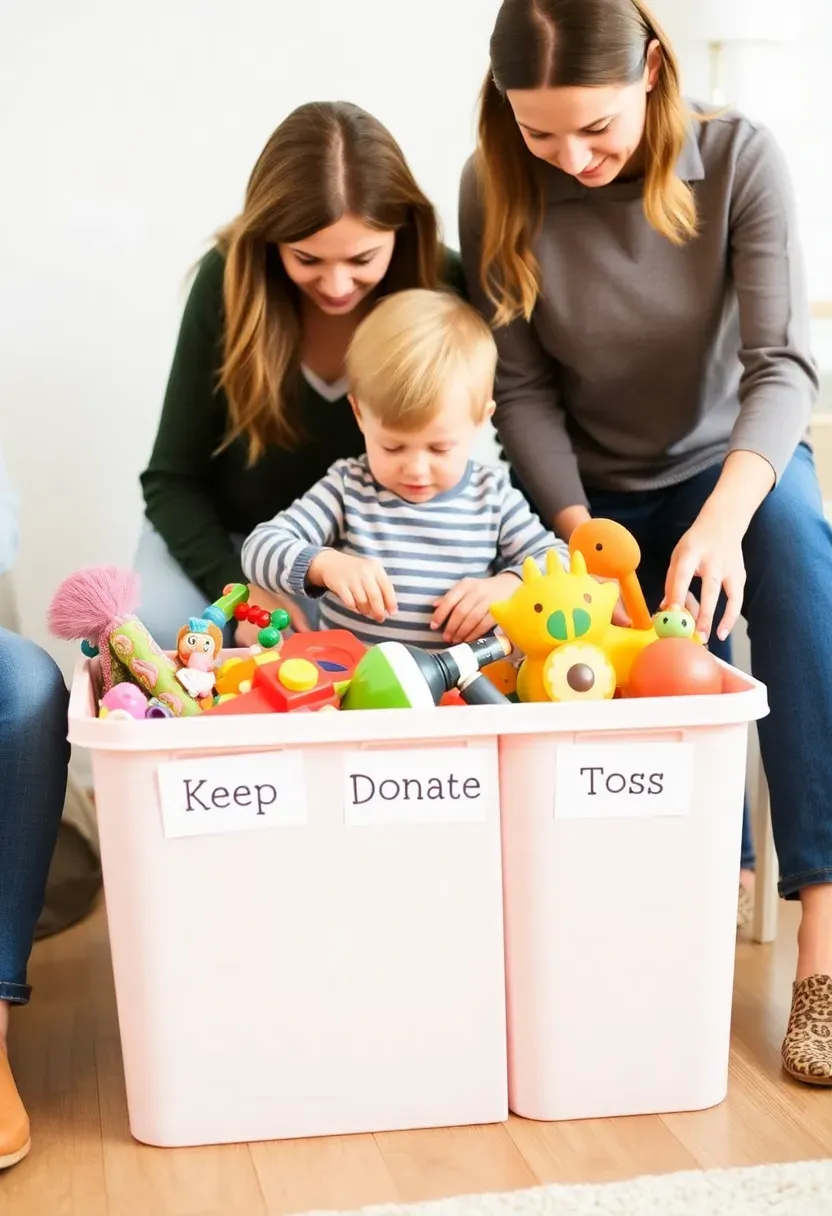
Introduce the "Keep, Donate, Toss" method. Give each child three bins or bags labeled accordingly.
- Keep: Items they genuinely use and love. Limit the number to prevent re-cluttering.
- Donate: Items in good condition they no longer play with.
- Toss: Broken items, trash, or things beyond repair. We also talk about where donations go — a local charity, a friend's younger sibling, a women's shelter — so kids understand their impact. This connects to our broader Sunday reset routine for busy moms philosophy of mindful consumption over constant accumulation. For items kids are genuinely torn about, use a "maybe" box: seal it, date it, and if nobody asks for anything inside within 30 days, it gets donated without drama. This approach is key to successfully decluttering kids' bedrooms step-by-step.
Hack #6: Reward Systems That Actually Work (Beyond Just Money)
While an allowance can be a motivator, relying solely on money for chores can sometimes backfire. Instead, focus on non-monetary rewards that foster family connection and fun. After a successful spring cleaning with kids session, celebrate! A family movie night, choosing the next takeout meal, a trip to the park or library, extra screen time, or a special dessert can be powerful motivators.
Visual chore charts with stickers or stars are fantastic for younger children, providing instant gratification and tracking progress. For older kids, tying cleaning efforts to privileges can work. For example, "Your screen time starts after your room is tidy," or "We can go to the pool once the living room is ready." The key is consistency and making the rewards meaningful to your child. I’ve found that shared experiences, like a family hike or a game night, often resonate more deeply than a few dollars. These tactics are also great for overall positive parenting hacks.
Hack #7: Tackling Tricky Zones: Specific Tips for Toy Rooms & Bedrooms
Kids' spaces often become the biggest battlegrounds during spring cleaning. Breaking it down into manageable zones is crucial.
- Kids' Bedrooms/Playroom: This is often the most overwhelming. Toddlers can sort toys into "keep" and "donate" piles using the method above. Older kids wipe shelves, dust their dresser, vacuum with a handheld like the Black+Decker Dustbuster, and organize drawers. We use labeled bins for everything from LEGOs to art supplies — a trick I picked up from our small laundry room organization project. Consider implementing an easy toy rotation system to keep clutter down year-round.
- Closets & Dressers: This is a prime spot for spring cleaning. Have kids try on clothes to see what fits and what needs to be donated. Store out-of-season clothes in under-bed bins or high shelves. Teach them to fold clothes neatly or use drawer dividers to keep things tidy.
- Desks & Study Areas: Help older kids go through papers, discard old school work, and organize supplies. A simple desk organizer can work wonders.
Hack #8: Dealing with Resistance: Gentle Strategies for Unwilling Helpers
Let's be honest, not every child will jump for joy at the mention of spring cleaning with kids. I've faced my share of eye-rolls and dramatic sighs. When resistance hits, here are my go-to strategies:
- Offer Choices: Instead of "Clean your room now," try "Would you like to start by dusting or organizing your books?" Giving them a say, even small, empowers them.
- Work Together: Sometimes, a child just needs company. Sit down with them and work on a task side-by-side. Your presence and participation can be a huge motivator.
- Break It Down: A big task like "clean your closet" can feel impossible. Break it into tiny steps: "First, take out all your shoes. Then, put them in their designated spot."
- Acknowledge Feelings: "I know cleaning isn't your favorite thing to do, but it's important for our home." Validating their feelings can diffuse tension.
- Revisit Motivation: Remind them of the "why" – getting ready for summer fun, making space for new adventures, or the reward system you've set up.
- The "When/Then" Method: "When you finish tidying your books, then we can go to the park." This clearly links the chore to a desired activity.
Hack #9: Post-Cleaning Celebration & The 'Sparkle Maintenance' Plan
Once the big spring cleaning is done, celebrate your family's hard work! Order pizza, have a movie night, or plan a fun outing. Acknowledging their effort makes the entire experience more positive and reinforces teamwork. This celebration is crucial for making spring cleaning with kids a memorable and positive family event.
But the work isn't truly done if you want to avoid a massive clean-up next year. Implement a "Sparkle Maintenance" plan. This means daily and weekly habits to keep the home relatively tidy. Our family makes a point to do a quick 10-minute tidy every evening before bed. This prevents clutter from accumulating and makes future deep cleans less overwhelming. Teaching kids to put things away immediately after use, rather than letting them pile up, is a significant improvement. Consistency, as I've learned through trial and error, is key to maintaining a clean and organized home.
Hack #10: Essential Spring Cleaning Checklist for Busy Families
To make your spring cleaning with kids truly stress-free, having a comprehensive, yet flexible, checklist is vital. This isn't about perfection, but about ensuring all key areas get attention. Break it down by room or area, and then assign tasks based on age, just like we discussed in Hack #1.
General Areas (Assign to older kids/teens or adults):
- Wash windows (inside and out)
- Clean blinds/curtains
- Dust ceiling fans and light fixtures
- Wipe down baseboards and doors
- Vacuum/mop all floors
- Clean entryways and mudrooms
Kids' Bedrooms/Playroom (See Hack #7 for details):
- Declutter toys (Keep, Donate, Toss)
- Organize books and craft supplies
- Wipe down furniture and surfaces
- Change and wash bedding
- Vacuum/sweep floor
Living Areas:
- Dust all surfaces, electronics, and decor
- Clean mirrors and glass tables
- Fluff pillows, vacuum upholstery
- Wipe down coffee tables and end tables
Kitchen (See Hack #6, kids can help with wiping counters, sweeping):
- Wipe down cabinet fronts
- Clean inside microwave
- Wipe down countertops
- Sweep and mop floor
- Organize pantry (older kids can help sort)
Bathrooms (Older kids with supervision):
- Wipe down counters and sink
- Clean mirrors
- Scrub toilets and showers (adult-supervised)
- Restock essentials
Remember, this is a guide, not a rigid rulebook. Adapt it to your family's needs and pace. The goal is a cleaner home and kids who feel empowered and responsible.
Frequently Asked Questions
What are the best age-appropriate chores for toddlers during spring cleaning?
Toddlers can help with simple tasks like putting toys in bins, wiping low shelves with a damp cloth, dusting with a microfiber cloth, or collecting dirty laundry. Focus on tasks that are safe, easy, and make them feel involved.
How can I motivate my kids to help with spring cleaning without nagging?
Make it a game, use a visual chore chart, offer small non-monetary rewards (like extra screen time or a special outing), play upbeat music, and lead by example. Frame it as a family mission with a shared goal.
What are some safe, non-toxic cleaning products kids can use?
Look for plant-based, eco-friendly brands like Seventh Generation, Mrs. Meyer's, or ECOS. For simple tasks, a spray bottle with water and a tiny bit of dish soap, or a vinegar-water solution, are safe and effective.
How do I make decluttering toys fun for my children?
Turn it into a 'treasure hunt' for items to donate, use a 'maybe' box for 30 days, or encourage them to choose a few favorite toys to keep and pass on the rest. Focus on making space for new adventures, not just getting rid of things.
What's a good spring cleaning checklist for families?
A family checklist should include age-appropriate tasks for each room: dusting, wiping surfaces, organizing toys, making beds, vacuuming, and putting away seasonal items. Break it down into small, manageable daily tasks over a week or two.
How do I deal with kids who refuse to help with spring cleaning?
Dealing with resistance involves offering choices, working alongside them, breaking tasks into smaller steps, and acknowledging their feelings. Consistency and linking chores to privileges or rewards can also be effective.
You might also like

Back to School Organization Hacks for Busy Moms
12 min read

Daily Cleaning Routine for Working Moms: 15+ Easy Hacks for a Tidy Home
9 min read

Chaos to Calm: Declutter Kids Bedroom Step-by-Step with 7 Easy Hacks for Busy Moms to Reclaim Sanity
10 min read

Simplify Playtime: The Easy Toy Rotation System That Will Transform Your Home
9 min read